
Short Courses
| Sun. 22 Nov. | Mon. 23 Nov. | ||
|---|---|---|---|
| Rm | AM | PM | AM |
| 412 | SC-1: 08:30-16:30 Practical Rock Engineering with Emphasis on Tunnels | SC-5: 08:30-12:00 Multiscale X-ray Computed Tomography Applications.... | |
| 413 | SC-2: 08:30-16:30 Rock Fracture Grouting | SC-6: 08:30-12:30 From Speckles to Strains: Practical Digital Image Correlation (DIC) .... | |
| 414 | SC-3: 09:00-12:00 Earthquake Motions in Rock Engineering | SC-4: 13:30-17:30 Advanced Rock Mechanics for Deep Mining Workshop | SC-7: 09:00-12:00 Trend in Bio-Rock Mechanics |
SC-1: Short Courses 1
- Title
- Practical Rock Engineering with Emphasis on Tunnels
- Date/Time
- Sunday, 22 November 2026, 08:30-16:30
- Venue
- Rm 412
- Price
- 8,000 JPY
- Organized by
- Dr. Nick Barton (Nick Barton & Associates)
- Contact Person
- Dr. Nick Barton (Nick Barton & Associates)
- Contact
E-mail address - nickrbarton(a)hotmail.com Note: Replace "(a)" with "@"
Abstract
The course will include developments now widely used internationally that the course holder has developed in the last 50, 25 and 10 years.
1. First of all, Q-system correlations will be described that were not available when Q was first developed. Correlations of Q to parameters useful for design will be shown, like stress-dependent modulus and velocity, tunnel deformation, relative cost and relative time for NMT single-shell tunnels and caverns. A basic illustrative Q-parameter explanation and a streamlined method to collect logging data will lead into these later correlations with Q. Pre-injection in tunnels and improvement of Q parameters will also be touched on.
2. Concerning TBM tunnels, case record analysis including open-gripper, double-shield and world records will be introduced as a starting point for TBM prognosis. This will focus on AR (actual advance rate) and T (total time) not just PR (penetration rate). The Q-TBM prognosis model will be introduced and illustrated with comparison to multi-TBM rail projects. Delays in fault zones will be focused on.
3. Development of the Barton-Bandis JRC-JCS scaled input data for discontinuum modelling will be described, and discontinuum modelling will be contrasted to continuum modelling, also in relation to slopes. JRC or GSI will be a topic here.
4. Nuclear waste rock mechanics research and design experiences during about 30 years of the lecturer’s career will be described. This will include multiple sites in the USA for ONWI and DoE (including ‘the new subject’ of thermal over-closure), and multiple sites in Sweden for SKB, and details from several years consultancy with UK Nirex. A total of ten hard rock projects in five countries.
Outline
-
08:30-10:00
Q-system and later developments for drill-&-blast tunnels & caverns.
-
10:00-10:30
Questions
-
10:30-12:00
TBM case record analysis and PR, AR, T prognosis based on QTBM
-
12:00-13:00
Lunch time
-
13:30-14:30
Barton-Bandis, JRC-JCS, scaled input data, for discontinuum modeling
-
15:00-16:00
Nuclear waste rock mechanics: ten hard rock projects, five countries
-
16:00-16:30
Questions
Instructors / Coordinators

Dr. Nick Barton (Nick Barton & Associates)
SC-2: Short Courses 2
- Title
- Rock Fracture Grouting
- Date/Time
- Sunday, 22 November 2026, 08:30-16:30
- Venue
- Rm 413
- Price
- 7,000 JPY
- Organized by
- ISRM Commission on Rock Grouting
- Contact Person
- Mohamed El Tani (Rockgro)
- Contact
E-mail address - info(a)rockgro.com Note: Replace "(a)" with "@"
Abstract
This short course is intended to give participants understanding of rock fractures grouting and the design of watertight structures. The ultimate developments in rock fractures grouting are presented as well as their practical applications and integrations in grouting procedures and models including GIN, the Swedish design, the Amenability theory and the classical approach of grouting to refusal.
This course is vital for all professionals working in major tunnel and dam construction, and scientists and researchers working in the development of advanced experiments, models and procedures for rock grouting.
Outline
-
08:30-10:15
Basic part 1: Refusal and the minimal flow criterion
-
10:00-10:30
Morning break
-
10:30-12:30
Basic part 2: Procedures: Grouting to refusal, GIN, SD and Amenability
-
12:30-13:30
Lunch time
-
13:30-14:15
Pre-excavation grouting in an urban road tunnel
-
14:20-15:15
Rapid Repair Using Polyurethane Grouting
-
15:30-16:30
Basic part 3: Foremost development and soundness
Instructors / Coordinators
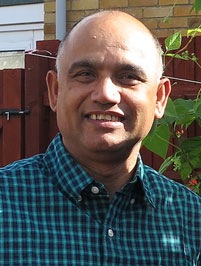
Prof. Krishna Panthi (NUST, Bergen, Norway)
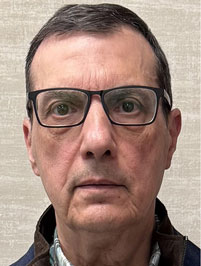
Dipl.Eng. M. El Tani (Rockgro)

Dr. Meimei Hao (Zhengzhou University, China)
SC-3: Short Courses 3
- Title
- Earthquake Motions in Rock Engineering
- Date/Time
- Sunday, 22 November 2026, 09:00-12:00
- Venue
- Rm 414
- Price
- 6,000 JPY (3,000 JPY for Students)
- Organized by
- ISRM Commission on Earthquake Motions in Rock Engineeing
- Contact Person
- Dr. Naoki Iwata (Chuden Engineering Consultants Co.,Ltd)
- Contact
E-mail address - n.iwata(a)cecnet.co.jp Note: Replace "(a)" with "@"
Abstract
Earthquakes are among the most devastating natural hazards, often causing severe damage to rock engineering structures such as tunnels, slopes, and dams. Strong ground motion characteristics are strongly controlled by causative faults and local geological conditions.
This short course provides an overview of techniques for estimating and measuring strong ground motions relevant to rock engineering, with emphasis on practical application in design. The course begins with a comparative overview of major strong motion estimation techniques, summarizing their advantages, limitations, application examples, and remaining challenges based on the outcomes of the activities of Dynamic Rock Mechanics Committee in Japan.
Detailed lectures then cover empirical methods, Green’s function–based approaches, finite element–based 3D fault rupture simulations, and its practical application to the estimation of earthquake-induced mountain tunnel damage with multiscale one-way coupling method. Practical applications and strong motion measurement networks are also introduced.
Outline
-
Part 0
An Overview of Strong Motion Evaluation Methods (Iwata)
-
Part 1
Strong Motion Estimation Techniques
- Empirical techniques (Aydan)
- Green’s function–based Strong Motion Estimation Procedures (Ikeda)
- FEM-based 3D fault rupture simulation (Tsuda)
- Multiscale one-way coupling method to estimate earthquake-induced tunnel damage (Sainoki)
-
Part 2
Practical Applications (Tunnels, Underground Caverns, Slopes, Foundations)
-
Part 3
Measurement Techniques
Instructors / Coordinators

Dr. Naoki Iwata (Chuden Engineering Consultants Co.,Ltd)
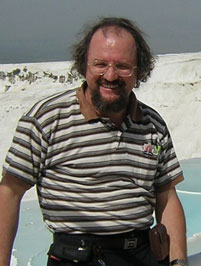
Emeritus Prof. Ömer Aydan (University of the Ryukyus)
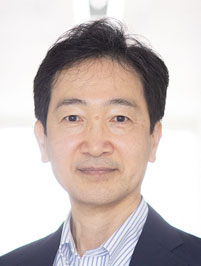
Prof. Takaaki Ikeda (Nagaoka University of Technology)
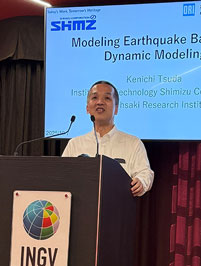
Dr. Kenichi Tsuda (Shimizu Corporation)
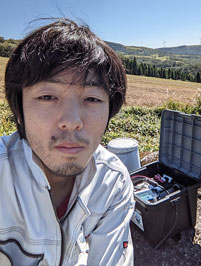
Prof. Atsushi Sainoki (Kumamoto University)
SC-4: Short Courses 4
- Title
- Advanced Rock Mechanics for Deep Mining Workshop
- Date/Time
- Sunday, 22 November 2026, 13:30-17:30
- Venue
- Rm 414
- Price
- 8,000 JPY (4,000 JPY for Students)
- Organized by
- ISRM Commission on Deep Mining
- Contact Person
- Abbas Taheri (Queen’s University, Canada)
- Contact
E-mail address - abbas.taheri(a)queensu.ca Note: Replace "(a)" with "@"
Abstract
One of the biggest challenges facing the future of the global mineral sector is the decline in mineral resources due to high production rates and difficulties in extracting deep-earth deposits. Exploring and mining at greater depths offers a potential solution to this urgent problem. However, the violent, uncontrolled failure of rocks in deep mines poses a serious threat to this goal.
This workshop aims to present current research and engineering practices in deep mining and facilitate discussions to share knowledge from research to practice. It will cover rock behaviour and its failure in deep underground openings in both the short and long terms, as well as the operational and design challenges of deep high-stress mining. The workshop will also address methods to handle high-stress and problematic ground conditions and seismicity, with a special focus on numerical modelling to predict mine seismicity. Presenters will demonstrate geomechanical problems faced in operating mines and discuss approaches to tackling these issues.
Outline
-
13:30-13:40
Opening and Introduction (Chair)
-
13:40-14:30
Geomechanical Challenges in Deep Underground Mining (Abbas Taheri)
-
14:30-15:20
Modelling the True Mechanics of Cave Mining (Murat Karakus)
-
15:20-15:50
Coffee Break
-
15:50-16:40
Assessment and control of fault-slip related seismic events (Atsushi Sainoki)
-
16:40-17:15
Rock Violent Failure Characterization in the Laboratory (Abbas Taheri)
-
17:15-17:30
Closing and Discussion
Instructors / Coordinators
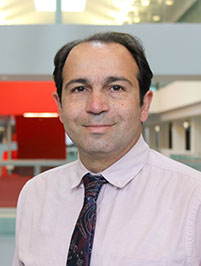
Dr. Abbas Taheri (Queen’s University, Canada)

Dr. Murat Karakus (Adelaide University, Australia)
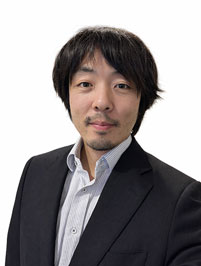
Dr. Atsushi Sainoki (Kumamoto University, Japan)
SC-5: Short Courses 5
- Title
- Multiscale X-ray Computed Tomography Applications Combined with In-situ Tests and Image Analyses for Hydraulics and Mechanical Characterization of Geomaterials
- Date/Time
- Monday, 23 November 2026, 08:30-12:00
- Venue
- Rm 412
- Price
- 7,000 JPY (5,000 JPY for Students)
- Organized by
- X-Earth Center, Kumamoto University, Japan
- Contact Person
- Prof. Atsushi Sainoki (Kumamoto University, Japan)
- Contact
E-mail address - atsushi_sainoki(a)kumamoto-u.ac.jp Note: Replace "(a)" with "@"
Abstract
X-ray CT methods have been extensively employed in the field of rock mechanics, as one of the non-destructive testing techniques, to characterize hydraulic and mechanical properties of rocks. Although various relevant studies have been undertaken, their applications are often limited to the microscopic visualization of porous materials.
X-Earth Center at Kumamoto University has been accumulating CT-related knowledge and technologies for almost 30 years, with multiscale X-ray CTs, including the latest nano-focused X-ray CT. Taking the full advantage of the uniqueness, we have been conducting cutting-edge studies to characterize and elucidate the microscopic mechanical and hydraulic behaviour of geomaterials whilst developing and employing various small-scale in-situ testing devices as well as latest three-dimensional image analysis methods.
In this short course, we will introduce our recent studies, covering fundamentals of the X-ray CT method, in-situ testing methods, and image analyses, to visualize and quantify the microscopic deformation of geomaterials, pore-scale miscible fluid flow, and enzyme-induced mineral precipitation. These studies are intended to provide new insights into applications of X-ray CTs to elucidate complicated mechanical, chemical, and hydraulic responses of geomaterials related to emerging various engineering projects.
Outline
-
08:30-09:00
Introduction of X-Earth Center and fundamentals of X-ray CT method
-
09:00-09:30
Visualization of enzyme-induced mineral precipitation inside a porous rock
-
09:45-10:45
3D visualization of viscous fingering in miscible fluids Flow in porous materials
-
11:00-12:00
Analysis of the microscopic mechanical behaviour of geomaterials with the CT-based Digital Volume Correlation method (DVC)
Instructors / Coordinators
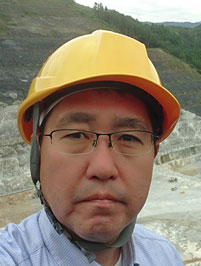
Prof. Akira Sato (Kumamoto University)
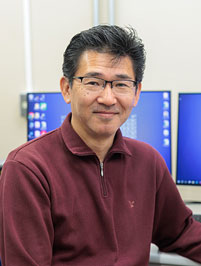
Prof. Toshifumi Mukunoki (Kumamoto University)
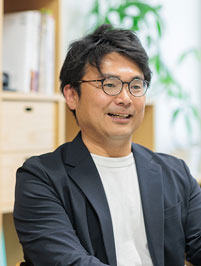
Prof. Daiki Takano (Kumamoto University)
SC-6: Short Courses 6
- Title
- From Speckles to Strains: Practical Digital Image Correlation (DIC) for Rock Mechanics Applications
- Date/Time
- Monday, 23 November 2026, 08:30-12:30
- Venue
- Rm 413
- Price
- 9,000 JPY (5,000 JPY for Students)
- Organized by
- Prof. Debasis Deb (Indian Institute of Technology Kharagpur, India)
- Contact Person
- Prof. Debasis Deb (Indian Institute of Technology Kharagpur, India)
- Contact
E-mail address - deb(a)iitkgp.ac.in, deb.kgp(a)gmail.com Note: Replace "(a)" with "@"
Abstract
Digital Image Correlation (DIC) has become an increasingly popular non-contact, full-field measurement technique in rock mechanics, offering significant advantages over conventional point-based instrumentation for capturing displacement and strain fields. Despite its wide adoption, DIC measurements in rock mechanics experiments often suffer from inaccuracies arising from inadequate speckle patterns, improper subset or element size selection, unquantified noise, and incorrect interpretation near discontinuities such as joints and cracks. This short course aims to provide a practical, rock-mechanics-oriented introduction to DIC, with a strong emphasis on reliability, physical interpretation, and good experimental practice.
The course begins with the fundamental theory of subset-based and global DIC (2D and 3D), outlining their underlying assumptions, capabilities, and limitations. Typical applications of DIC in rock mechanics such as deformation monitoring, strain localization, joint characterization, and fracture initiation are then discussed to provide experimental context. A substantial portion of the course focuses on best practices for DIC measurements, including the design and implementation of effective speckle patterns on rock surfaces, quantitative assessment of speckle quality, and speckle-aware selection of subset or finite element sizes.
Key challenges specific to rock mechanics experiments, such as handling displacement and strain discontinuities, large rigid-body motions, and material heterogeneity, are addressed in detail. Methods to estimate the noise floor of a DIC system, distinguish measurement noise from physical deformation, and validate DIC results against conventional sensors (e.g., LVDTs) are presented. An introductory overview on linking DIC measurements with numerical simulations, including finite element–based interpretations of displacement and strain fields, is also provided. The course also highlights common do’s and don’ts in DIC experimentation and provides guidance on transparent and reproducible reporting of DIC results in research publications.
Targeted at students, researchers, and practitioners in rock mechanics, this short course aims to bridge the gap between DIC theory and robust, physically meaningful experimental measurements.
Outline
-
08:30-08:45
Introduction and motivation
-
08:45-09:45
Fundamentals of 2D and 3D DIC
-
09:45-10:45
Applications of DIC in rock mechanics
-
10:45-11:00
Coffee break
-
11:00-11:45
Good practices for reliable DIC measurements
-
11:45-12:15
DIC in advanced areas of rock mechanics
-
12:15-12:30
Reporting, Interpretation and Discussion of DIC results
Instructors / Coordinators
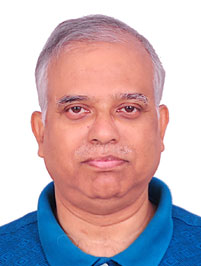
Prof. Debasis Deb (Indian Institute of Technology, Kharagpur)

Mr. Tushar Bhandari (Indian Institute of Technology, Kharagpur)
SC-7: Short Courses 7
- Title
- Trend in Bio-Rock Mechanics
- Date/Time
- Monday, 23 November 2026, 09:00-12:00
- Venue
- Rm 414
- Price
- 7,000 JPY
- Organized by
- ISRM Commission on Bio-Rock Mechanics
- Contact Person
- Prof. Hitoshi Matsubara (University of Ryukyus, Japan)
- Contact
E-mail address - matsbara(a)cs.u-ryukyu.ac.jp Note: Replace "(a)" with "@"
Abstract
Bio-Rock Mechanics is an emerging interdisciplinary field that investigates the interactions between biological processes and the mechanical behavior of rocks and rock masses. While traditional rock mechanics has largely focused on physical and chemical factors, growing evidence shows that biological activity can significantly influence rock strength, deformation, permeability, and long-term stability in natural and engineered subsurface systems.
This short course provides a comprehensive introduction to Bio-Rock Mechanics, covering fundamental concepts, experimental and analytical approaches, and recent advances in the field. The course is structured as a series of lectures delivered by multiple experts, each addressing a key aspect of bio-mediated rock mechanical behavior. Topics include microbial and biological processes relevant to geological materials, mechanisms of bio-induced alteration of rock properties, laboratory and field observations, and modeling approaches that couple biological, chemical, and mechanical effects.
In addition to foundational principles, the course highlights recent research trends and emerging applications of Bio-Rock Mechanics. These include bio-mediated rock modification, long-term performance of underground infrastructure, energy and environmental applications such as CO₂ sequestration and nuclear waste disposal, and the role of biological processes in rock degradation and healing.
Designed for researchers, engineers, and graduate students in rock mechanics and related geoscience and engineering disciplines, this course aims to provide participants with a unified framework for understanding and incorporating biological processes into rock mechanical analyses. By bridging traditionally separate disciplines, the short course seeks to foster new perspectives and stimulate interdisciplinary research in this rapidly developing field.
Outline
-
09:00-09:10
Opening and Overview
-
09:10-09:45
Biological Processes in Rock Materials
-
09:45-10:20
Experimental and Field Investigation Methods
-
10:20–10:35
Break
-
10:35–11:10
Modeling and Coupled Processes
-
11:10–11:40
Applications and Recent Advances
-
11:40–12:00
Discussion and Closing
Instructors / Coordinators
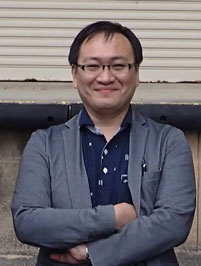
Prof. Hitoshi Matsubara (University of the Ryukyus)

Dr. Sivakumar Gowthaman (Kyushu University)
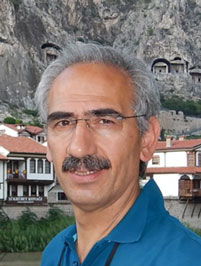
Prof. Halil Kumsar (Pamukkale University)
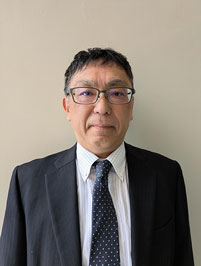
Prof. Toshiro Hata (Hiroshima University)
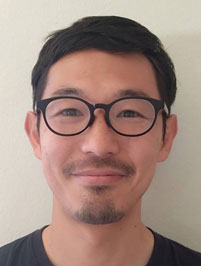
Prof. Daisuke Asahina (National Institute of Advanced Industrial Science and Technology, Japan)